BiosphereRestoration.org
Our mission is to educate and empower the 8 billion people on the planet to restore ecosystems and watersheds in their nations and homelands to sequester carbon, reverse Global Warming, stop the current mass extinction and restore the Earth.
BiosphereRestoration.org is expanding our efforts in multiple research, conservation and education directions to help increase our impact, reach and ability to restore our planet. Please donate and support our work. Thank you.
To restore the Earth, BiosphereRestoration.org provides in depth research-based ecological methodologies to teach people how to restore natural forest ecosystems, increase infiltration of rain water into the soil, and use low-height beaver dam analogs (small dams that fish can swim over or through) to restore streams and watersheds, hold back water on the landscape, and create wetland habitat for wildlife and people.
We believe restoring natural forest ecosystems and watersheds globally can reverse Global Warming, stop the current mass extinction and restore the Earth's biosphere. Our goal is to get every person on this planet to plant a tree and organize with your friends and neighbors to restore forests and streams and help repair our beautiful planet.
Beavers have been eradicated from many parts of North America, Europe, the Middle East and Asia. Beavers capability to sequester carbon and make Climate Refuges for threatened and endangered species, makes them one of the best tools our civilization can use to accelerate the repair of our biosphere.
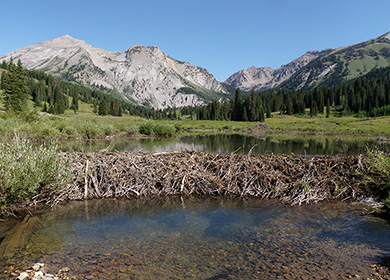
The Global Loss of Wetlands
In the last 200 years, 85% of wetlands have disappeared (Crist, E., 2022).
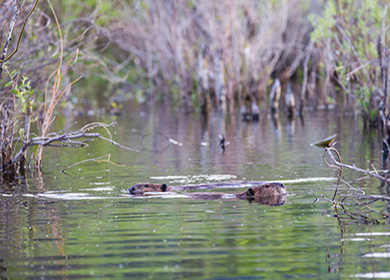
Beavers Create Climate Refuges
"An estimated 80% of all terrestrial vertebrates rely on riparian ecosystems at some point in their lifecycle (Krueper 1993). Beavers reverse habitat loss by creating stable wetland and riparian ecosystems that are resistant to flood, drought, and fire. A wide variety of plants, insects, amphibians, fish, mammals, and birds live in beaver ponds. Beavers are considered a keystone species, as well as ecosystem engineers (Fairfax and Westbrook, 2024)."
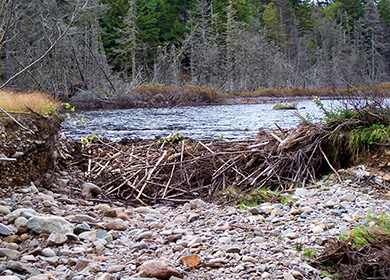
Beavers Reduce the Effects of Drought
Beaver dams slow the flow of water, reducing peak flows downstream (Puttock, Graham, Cunliffe, Elliott, & Brazier, 2017), storing and gently releasing water in times of drought (Hood & Bayley, 2008). "Beaver dams sequester sediment and create wet meadows that can moderate floods, augment early summer baseflows, sequester carbon in soils and standing biomass, decrease ecological problems posed by earlier spring stream recession, and potentially help cool early summer and post-wildfire stream temperatures (Baldwin, 2015)."
Low-height beaver dam analogs, made a natural materials found along the stream bank, can be used to restore streams and watersheds, and reverse damage from deforestation and herding. Beaver dam analogs are an excellent tool to restore streams and watersheds before reintroducing beavers. Beaver dam analogs and beavers, together, are a powerful combination to restore the Earth by sequestering carbon and creating natural ecosystems and habitats for common, rare and endangered species.
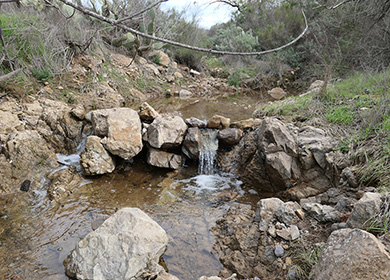
Impacts of Deforestation and Herding on Streams
For centuries, deforestation and herding along streams have severely denuded stream vegetation and reduced the build up of forest-derived organic matter such as leaves, twigs, branches, and logs in stream channels. The reduction of organic matter and structure in stream channel reduces resistance and the ability of the stream to slow down, hold back and store water. This results in the lowering of surficial aquifers and the drying out of surrounding ecosystems.
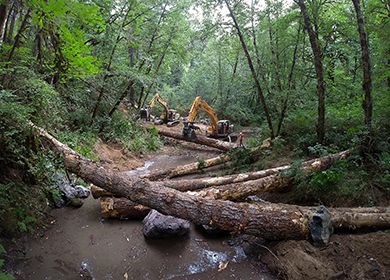
Beaver Dam analogs
Beaver Dam Analogs or BDAs are small artificial dams (that fish can swim over or through), typically made of natural materials found along the stream, that trap sediment, hold back and slow down water, and help restore the stream bed's elevation to its natural level. The use of BDAs, in combination with forest restoration, should increase the duration of streamflow in all seasons, create habitat for upland, aquatic, and wetland species, create a more humid climate, reduce water stress in times of annual and prolonged drought, and reduce sediment loads. BDAs are an excellent tool to help restore stream ecosystems before reintroducing Beavers.
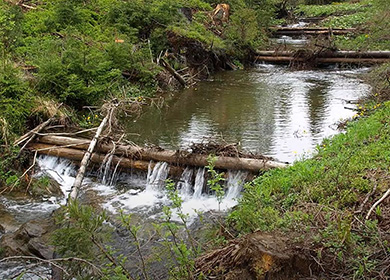
Beaver Dam Analogs should be used in Streams that are Gently Sloping and Slow flowing
In a literature review of BDA projects, Mackey, 2025 found BDAs were constructed on streams up to 8.3 m wide, with slopes up to 4.6% and stream power as great as 593.03 watts/m2 compared to site parameter metrics derived for beaver dams of up to 2,000 watts/m in streams with <6% slope (Pollock et al. 2014). However, even when implementing structures under these thresholds, BDA persistence and integrity is largely dependent on some level of continual maintenance (Bouwes et al. 2016; Orr et al. 2024).
BiosphereRestoration.org is focused on applying permaculture and ecological engineering approaches to hold back water on the land, increase the infiltration of rainwater in to the soil and aquifer, and create wetland ecosystems.
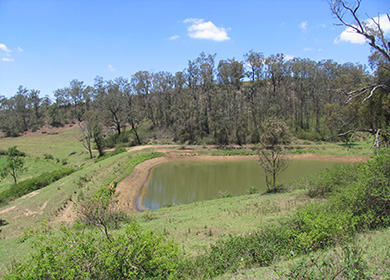
Reshaping Nature and Restoring Ecosystems
In the last century, Ecologists started applying Engineering and Systems principles and approaches to restore natural ecosystems and create systems that benefit society such as wastewater treatment wetlands, for example. In the 1960s, the fields of Ecological Engineering and Permaculture arose out this movement.
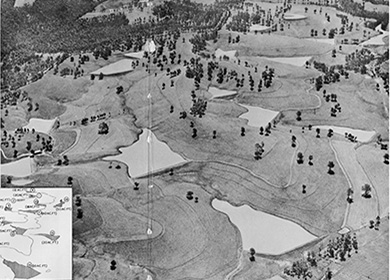
Permaculture
Permaculture is an ecology and systems-based land management approach that engineers and alters natural systems to maximize ecosystem services. Permaculture was invented by Bill Mollison and David Homgren. It is an amazing approach, widely used by farmers, ranchers, gardeners and land owners, that can restore ecosystems and sequester carbon.
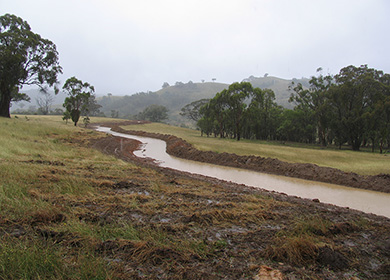
Ecological Engineering
Ecological engineering is defined as “the design of sustainable ecosystems that integrate human society with its natural environment for the benefit of both." Ecological Engineering was invented by Howard T. Odum. "It involves the restoration of ecosystems that have been substantially disturbed by human activities such as environmental pollution or land disturbance; and the development of new sustainable ecosystems that have both human and ecological value (Mitsch and Jorgensen, 2003)."
"Forty percent of the global population lacks access to clean, safe drinking water (Díaz et al., 2019).” Watershed restoration using small beaver dam analogs can not only sequester carbon but also provide clean water for drinking.
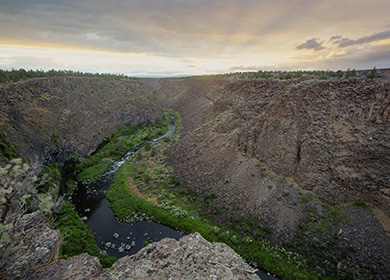
Streams are drying up around the world, Beavers and Beaver Dam analogs can mitigate this problem
Carlson et al., 2024 studied stream flow of streams in areas with Mediterranean-climates (these climates tend to be semi-arid) that had long-term gauge records. "They found consistent evidence of decreasing discharge trends, increasing zero-flow days, and steeper downward discharge trends in smaller stream basins. They also found that some streams have transitioned from perennial to intermittent flow states" (streams that used to flow year round are now only flowing part of the year). Their analyses provide evidence of stream drying consistent with predictions of climate change.
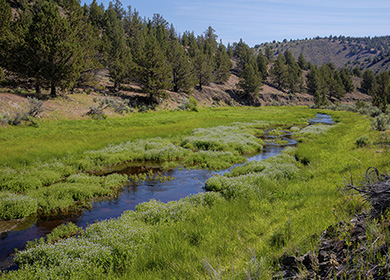
Beaver Dams: a Nature-based climate solution to mitigate the effects of Global Warming
"Rivers and streams, when fully connected to their floodplains, are naturally resilient systems that are increasingly part of the conversation on nature-based climate solutions. Reconnecting waterways to their floodplains improves water quality and quantity, supports biodiversity and sensitive species conservation, increases flood, drought and fire resiliency, and bolsters carbon sequestration. Climate-driven disturbances are actively pushing streams into increasingly degraded states, and the window of opportunity for restoration will not stay open forever. Therefore, now is the perfect time to apply the science of beaver-based low-tech process-based stream restoration to support building climate resilience across the landscape (Jordan and Fairfax, 2022)."
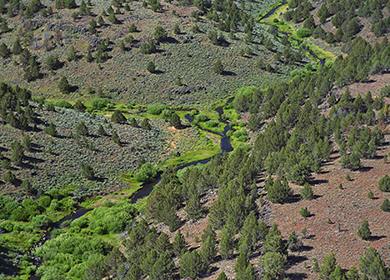
Riparian Forests and Beavers slow down and back up water, raise water tables and create wildlife habitat
"Floodplain-connected riverscapes have more large wood (loose wood, log jams) both on the ground and in the channel. Woody deposits in general increase the physical forcing of stream and floodplain structure and increase water residence time and primary productivity at the floodplain surface (Appling et al., 2014; Briggs et al., 2013; Collins et al., 2012; Helton et al., 2014; Magilligan et al., 2008; Osei et al., 2015; Poole et al., 2008). Beaver structures (dams, lodges, canals) and beaver dam associated vegetation function similarly, because they directly increase hydraulic diversity and vegetation productivity (Silverman et al., 2019) and enhance biological productivity across all trophic levels (Jordan and Fairfax, 2022)."
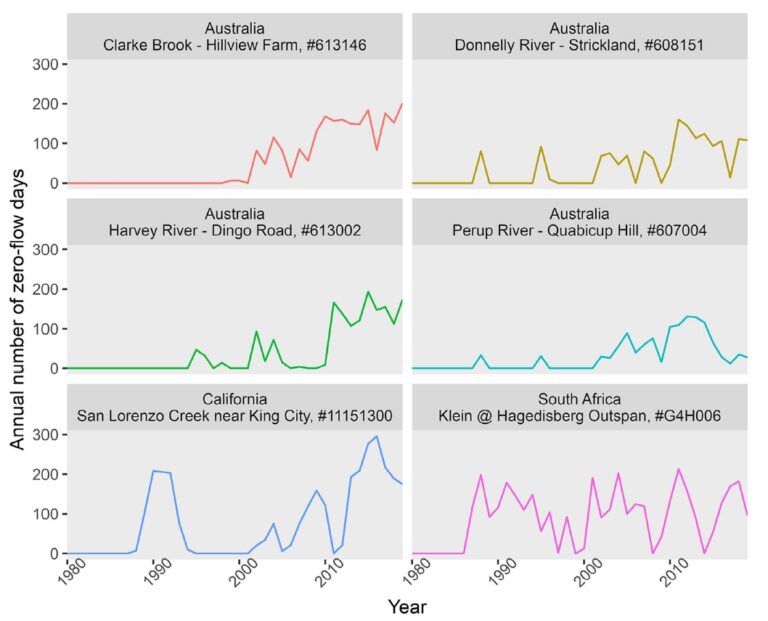
Six examples of perennial to intermittent flow shifts from free-flowing Mediterranean-climate streams—all from the larger pool of gauges showing evidence of a flow state shift (see Figure 2c). Note that these six examples are simply a subset of gauges that both (i) shifted in flow state and (ii) started with few to no zero-flow days before the flow shift (ie when the streams were perennial).Credit: Carlson et al., 2024.
"Global forest area is now approximately 68 per cent of the estimated pre-industrial level (Díaz et al., 2019).” BiosphereRestoration.org is dedicated to teaching people how to collect seeds, grow forest species, repair broken ecological processes, and restore climax forest ecosystems.
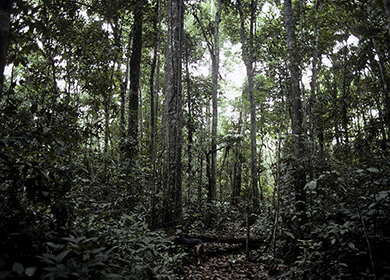
The Earth Currently has over 3 trillion trees
The Earth has over 3 trillion trees. "Of these trees, approximately 1.39 trillion exist in tropical and subtropical forests, 0.61 trillion in temperate regions, and 0.74 trillion in boreal regions (Crowther et al., 2015)." Crowder et al., 2015 estimates "that over 15 billion trees are cut down each year, and the global number of trees has fallen by approximately 46% since the start of human civilization."
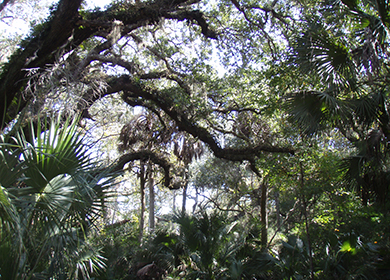
Together, We need to Restore almost a Billion hectares of Climax Forest
"The restoration of trees remains among the most effective strategies for climate change mitigation. We mapped the global potential tree coverage to show that 4.4 billion hectares of canopy cover could exist under the current climate. Excluding existing trees and agricultural and urban areas, we found that there is room for an extra 0.9 billion hectares of canopy cover, which could store 205 gigatonnes of carbon in areas that would naturally support woodlands and forests (Bastin et al., 2019)."
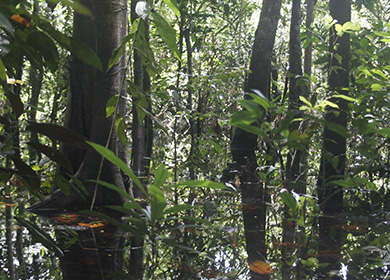
Forests Sequester half of all Fossil Fuels Emissions
Pan et al., 2024 "found that the carbon sink in global forests was steady, at 3.6 ± 0.4 Pg C yr−1 in the 1990s and 2000s, and 3.5 ± 0.4 Pg C yr−1 in the 2010s. Carbon sinks have increased in temperate (+30 ± 5%) and tropical regrowth (+29 ± 8%) forests owing to increases in forest area, but they decreased in boreal (−36 ± 6%) and tropical intact (−31 ± 7%) forests. The global forest sink is equivalent to almost half of fossil-fuel emissions (7.8 ± 0.4 Pg C yr−1 in 1990–2019). However, two-thirds of the benefit from the sink has been negated by tropical deforestation (2.2 ± 0.5 Pg C yr−1 in 1990–2019). To protect the forest carbon sinks, we need to limit deforestation, promote forest restoration and improve timber-harvesting practices (Pan et al., 2024)."
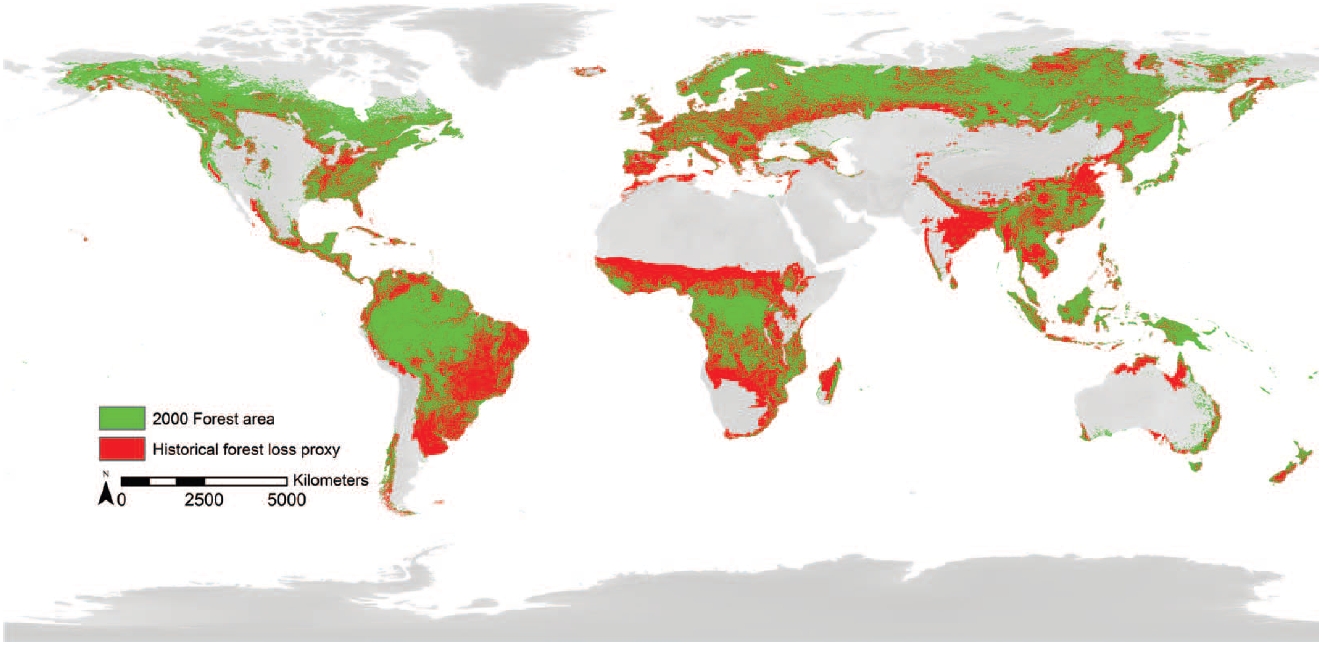
Approximation of historical (pre-agriculture) forest cover and net forest loss (approximately between 4000 B.C.- 2000 A.D.). Loss as a result of climate change over this extensive period is not included. Credit: Sandker et al., 2017.
Blue Carbon Ecosystems sequester large amounts of carbon in plant material and soils. They have been severely impacted by nutrient loading (eutrophication) of coastal waters. The restoration of watersheds globally will help remove nutrients from stream waters allowing for the restoration of Blue Carbon Ecosystems.
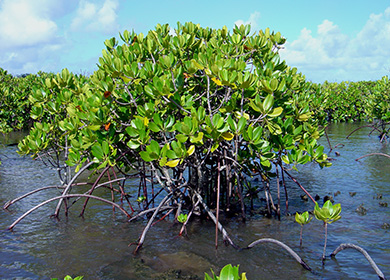
Mangrove Forests
Mangrove forests sequester between 4 to 20 Pg of blue carbon (i.e., 4 to 20 billion tons of carbon). Donato et al., 2011 estimated mangrove forests sequester about 1023 Mg of carbon per hectare with about 159 Mg of this being located above ground. Donato et al., 2011 also found that mangrove forests store between 71-98% of their carbon below ground in estuaries and 49-90% below ground in oceanic areas.
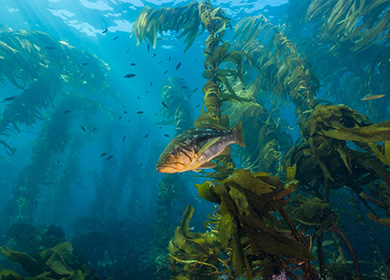
Kelp Forests
Kelp forests and macroalgae consists of both tropical and temperate species that include red, brown, green and blue-green algae. Worldwide, macroalgae sequesters approximately 173 teragrams of carbon per year (or about 381 billion pounds of carbon per year/ Krause-Jensen and Duarte, 2016).
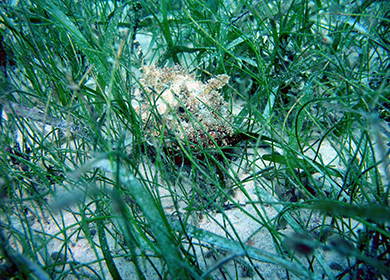
Seagrass Meadows
Worldwide, seagrasses sequester 75.5 to 151 Tg of carbon in biomass and up to 19.9 Pg of carbon in seagrass soils. 19.9 Pg of sequestered carbon is roughly equal to what is stored globally in tidal marshes and mangrove forests combined (Fourqurean et al., 2012).
Stopping Mass Extinction
“We are living in the time of the Sixth Mass Extinction. While many details elude us, we know that a mass extinction is underway from comparisons between background and current extinction rates, precipitous drops in wildlife populations, the shrinking of wild places, and the critical endangerment of biodiverse ecologies such as grasslands, tropical forests, wetlands, rivers and lakes, coral reefs, and continental shelves (Crist, E., 2022).”
“An estimated one million species are currently at risk of extinction (IPBES 2019) and current extinction rates are calculated to be several orders of magnitude greater than background rates estimated from the fossil record (De Vos et al. 2015) (UNEP Global Environment Outlook 7, 2025).”
In 2024, the World Wildlife Fund’s Living Planet Report 2024—A System in Peril, found that 73% of wildlife around the world have disappeared between 1970 and 2020.
BiosphereRestoration.org mission is to restore forests globally to sequester carbon and create high quality forest ecosystems.
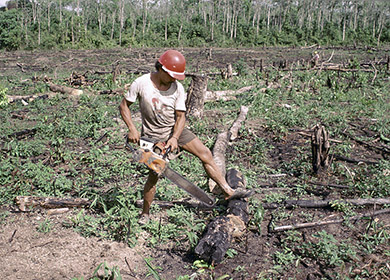
The Speed of Deforestation
"Between 1990 and 2015 logging reduced native forest cover by 290 million hectares (for comparison, the US state of Texas is about 70 million hectares). (Crist, E., 2022)".
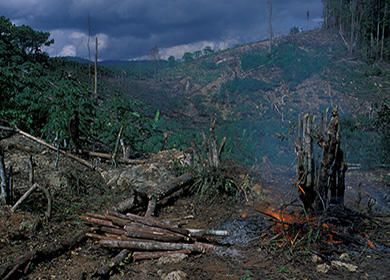
Degree of Forest Loss
High-biodiversity tropical forests continue to dwindle, and global forest area is now approximately 68 per cent of the estimated pre-industrial level (Díaz et al., 2019).”
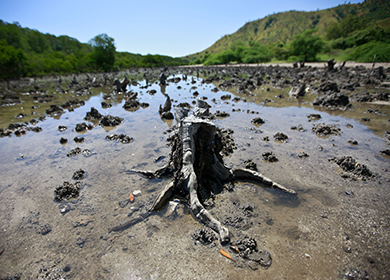
Global Loss of Mangrove Forests
Globally, over half of the mangrove forests have been lost due to urban development, aquaculture, mining and overexploitation for timber, fish, crustaceans and shellfish (Giri et al., 2011/Duke et al., 2007/Alongi, D.M., 2002).
A large percent of our planet is degraded due to deforestation, herding, and poor agricultural and land management practices. Restoring these degraded areas can sequester carbon and stop the current mass extinction.
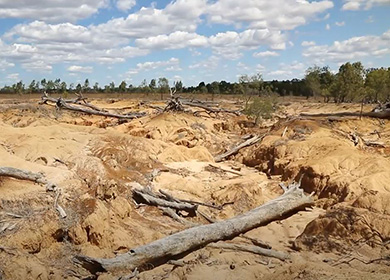
Land Degradation
"Seventy-five percent of land surface has been altered by human activity (Crist, E., 2022)."
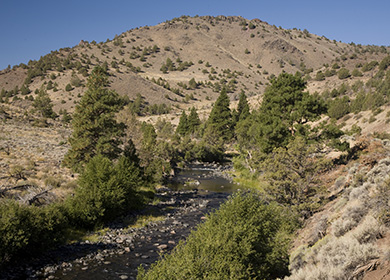
Restoring Stream Forests Slows Down Water and Sequesters Carbon
“Results indicate that old growth forests are significantly different than younger forests. Streams in old growth forests have more total wood, more closely spaced ramps and bridges that can act as key pieces for jams, and more jams per kilometer. There appears to be a positive feedback between total wood load and downstream spacing of jams. The presence of jams can influence the characteristics of wood in the channel, with jams increasing the retention of smaller diameter wood pieces in streams (Beckman, 2013).”
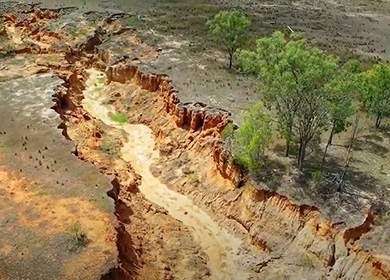
The Loss of Beavers in North America, Europe, the Middle East and Asia has caused the large-scale degradation of our planet's Streams
"When beavers are removed from streams and rivers, or prevented from re-establishing in their ancestral watersheds, the stream-floodplain system falls into disrepair (Wohl, 2021b). Once streams are disconnected from their floodplain, they become incised and transform from multiple channels into single channels. Sediment and carbon are exported from long-term storage, water warms and becomes eutrophic, the landscape dries out and fires run for miles across a uniform expanse of fuel, all leaving little in the way of healthy habitat for fish and wildlife (Jordan and Fairfax, 2022)."
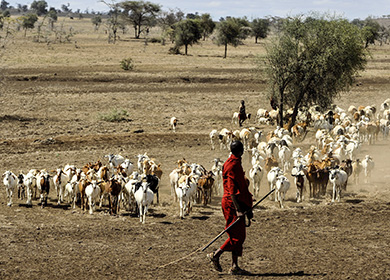
Globally, the herding of animals has caused the severe denuding of vegetation and erosion to stream ecosystems.
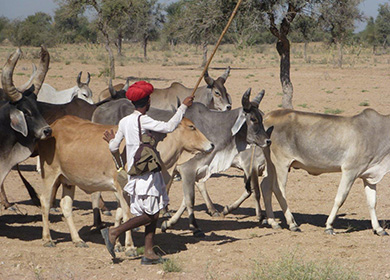
Agricultural and Pastoral Lands
"Over one third of the world’s land surface and nearly three-quarters of available freshwater resources are devoted to crop or livestock production (see UNEP's Figure 4.2 below). Crop production occurs on some 12 per cent of total ice-free land. Grazing occurs on about 25 per cent of total ice-free lands and approximately 70 per cent of drylands (Díaz et al., 2019).”
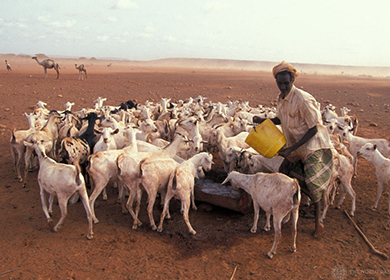
Gazing Animals Target Streams to Eat the Abundant Stream Vegetation
“Animals prefer green vegetation (Low et al., 1981; Ring et al., 1985)) and in arid and semi-arid areas will concentrate on those areas where green shoots survive longest, especially on flood plains, in valley floors or in drainage lines (Foran, 1984; Coppock et al., 1986; Scoones, 1989b; 1993; 1995). The surfaces of these areas are constantly trampled, therefore, and vegetation may be destroyed. In arid Australia riverine strips and calcareous soils are preferentially grazed, where green vegetation, shade and sheep campsite (shelter) locations are found. These preferred locations provide 60% of the vegetation production on 30% of the area, and it is on these areas that erosion is often prominent (Stafford Smith, 1990) (Evans, 1998).”
Grazing Animals are Attracted to Humid, Shady and Relatively flat Stream Valleys
“In more humid climates cattle and sheep may also congregate in preferred localities, on valley floors where the grasses and forbes are more palatable and nutritious (Skovlin, 1984; Kie and Boroski, 1996), and greener than on the more drought-prone shallow soils on adjacent slopes. Cattle prefer not to graze steep or rocky slopes and will often congregate on valley floors in summer in Colorado and in winter on gently sloping ridge crests (Senft et al., 1985). Sheep will often shelter or rest in shady valleys and on ridge crests (Bowns, 1971) or on or near rocky outcrops or broken ground. Areas of bare eroding soil are often prominent below convexities because sheep often shelter there (Evans, 1996b) (Evans, 1998).”
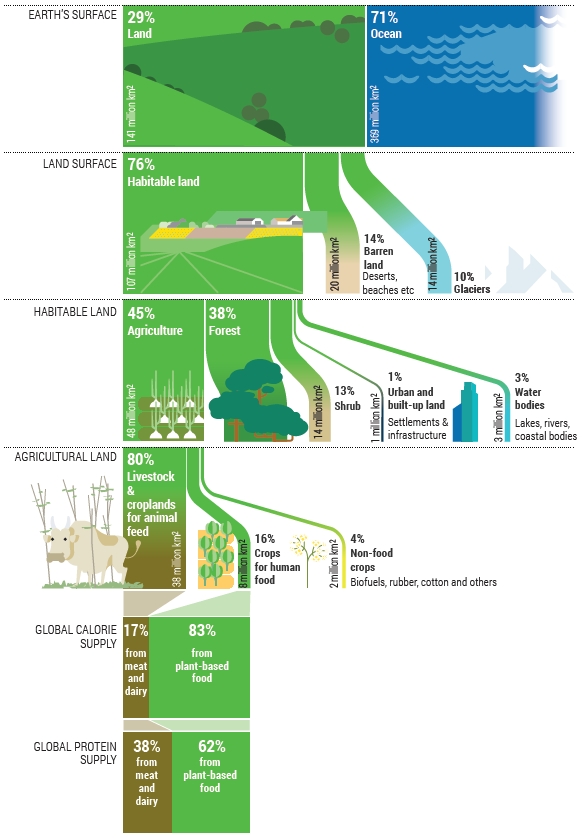
Global land use for food production in 2019. Credit: United Nations Environmental Program, Global Environment Outlook Seventh Edition, 2025.
References
- Alongi, D.M., 2002. Present state and future of the world’s mangrove forests. Environmental conservation, 29(3), pp.331-349.
- Baldwin, J., 2015. Potential mitigation of and adaptation to climate-driven changes in California’s highlands through increased beaver populations. California Fish and Game, 101(4), pp.218-240.
- Beckman, N., 2013. Crossing a threshold: The legacy of 19th century logging on log jams and carbon storage in Front Range headwater streams (Doctoral dissertation, Colorado State University).
- Brazier, R.E., Puttock, A., Graham, H.A., Auster, R.E., Davies, K.H. and Brown, C.M.L., 2020. Beaver: Nature’s ecosystem engineers. WIREs. Water, 8(1), pp.e1494-e1494.
- Carlson, S.M., Ruhí, A., Bogan, M.T., Hazard, C.W., Ayers, J., Grantham, T.E., Batalla, R.J. and Garcia, C., 2024. Losing flow in free‐flowing Mediterranean‐climate streams. Frontiers in Ecology and the Environment, 22(5), p.e2737.
- Crist, E., 2022. Witnessing mass extinction: What’s invisible, what’s visible, what’s possible. Biological Conservation, 275, p.109696.
- Crowther, T.W., Glick, H.B., Covey, K.R., Bettigole, C., Maynard, D.S., Thomas, S.M., Smith, J.R., Hintler, G., Duguid, M.C., Amatulli, G. and Tuanmu, M.N., 2015. Mapping tree density at a global scale. Nature, 525(7568), pp.201-205.
- Díaz, S., Settele, J., Brondízio, E.S., Ngo, H.T., Guèze, M., Agard, J., Arneth, A., Balvanera, P., Brauman, K., Butchart, S.H. and Chan, K.M., 2019. Summary for policymakers of the global assessment report on biodiversity and ecosystem services of the Intergovernmental Science-Policy Platform on Biodiversity and Ecosystem Services. Intergovernmental Science-Policy Platform on Biodiversity and Ecosystem Services.
- Duke, N.C., Meynecke, J.O., Dittmann, S., Ellison, A.M., Anger, K., Berger, U., Cannicci, S., Diele, K., Ewel, K.C., Field, C.D. and Koedam, N., 2007. A world without mangroves?. Science, 317(5834), pp.41-42.
- Evans, R., 1998. The erosional impacts of grazing animals. Progress in Physical Geography, 22(2), pp.251-268.
- Fairfax, E. and Westbrook, C., 2024. The ecology and evolution of beavers: ecosystem engineers that ameliorate climate change. Annual Review of Ecology, Evolution, and Systematics, 55(1), pp.323-345.
- Fourqurean, J.W., Duarte, C.M., Kennedy, H., Marbà, N., Holmer, M., Mateo, M.A., Apostolaki, E.T., Kendrick, G.A., Krause-Jensen, D., McGlathery, K.J. and Serrano, O., 2012. Seagrass ecosystems as a globally significant carbon stock. Nature geoscience, 5(7), pp.505-509.
- Giri, C., Ochieng, E., Tieszen, L.L., Zhu, Z., Singh, A., Loveland, T., Masek, J. and Duke, N., 2011. Status and distribution of mangrove forests of the world using earth observation satellite data. Global Ecology and Biogeography, 20(1), pp.154-159.
- Jordan, C.E. and Fairfax, E., 2022. Beaver: The North American freshwater climate action plan. Wiley Interdisciplinary Reviews: Water, 9(4), p.e1592.
- Krause-Jensen, D. and Duarte, C.M., 2016. Substantial role of macroalgae in marine carbon sequestration. Nature Geoscience, 9(10), pp.737-742.
- Mackey, T., 2025. Beaver Dam Analogues: A Review of Structure Installation and Analysis of Geomorphic and Biological Response in an Intermittent, Headwater Stream (Master’s thesis, University of Idaho).
- Mitsch, W.J. and Jørgensen, S.E., 2003. Ecological engineering: a field whose time has come. Ecological engineering, 20(5), pp.363-377.
- Sandker, M., Finegold, Y., D’annunzio, R. and Lindquist, E., 2017. Global deforestation patterns: comparing recent and past forest loss processes through a spatially explicit analysis. International Forestry Review, 19(3), pp.350-368.
- United Nations Environment Programme (2025). Global Environment Outlook 7: A future we choose –
Why investing in Earth now can lead to a trillion-dollar benefit for all. Nairobi. https://wedocs.unep.org/
handle/20.500.11822/49014. - WWF, 2024. Living Planet Report 2024—A System in Peril.
Contact
biosphererestoration@gmail.com
© 2026 All Rights Reserved.